The right washing machine could save you 26 000L of water a year
Here’s something most people don’t think about when shopping for a washing machine: the model you choose can make a real dent in your water bill. The best part? Going water-efficient doesn’t mean spending more money. We’ve pulled together some helpful info to guide your purchase whether you live in South Africa or abroad.
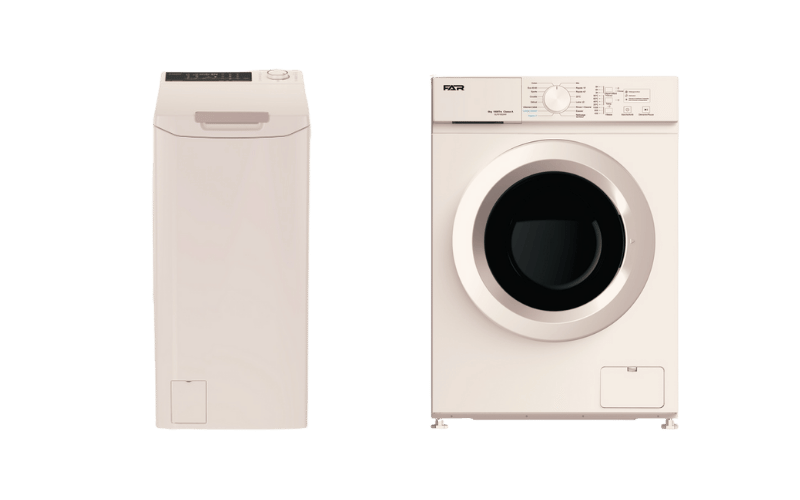
Top vs front-load washing machine
Front-Load vs. Top-Load: what's the difference?
Front-load machines are the water-saving champions. Instead of filling up the entire drum, they tumble your clothes through a smaller amount of water. This means less water used and less detergent needed. The drum movement technology in front-loaders is often better at removing dirt and stains from different types of fabrics. Plus, because there’s no central agitator yanking your clothes around, they’re much gentler on your garments. Front-loaders are particularly good at washing bulky items like comforters and pillows, which tend to clump together in top-loaders and don’t get as clean.
Top-load machines are the old-school style most of us grew up with—they fill the drum completely to soak your clothes. The rotating motion can cause clothes to bunch up, making them less effective for larger items. Modern top-loaders have gotten better, but if you’ve got an older model sitting in your laundry room, it could be using twice as much water as a front-loader.
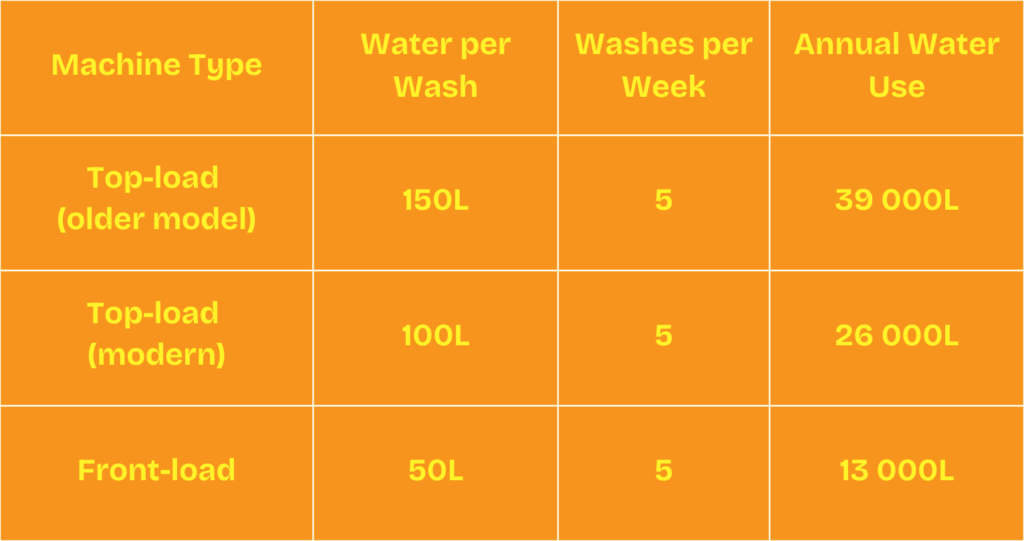
The difference between an old top-load and a front-load is 26 000L. That's equivalent to 200 bathtubs !
Look for the labels
When you’re at the store (or browsing online), keep an eye out for:
Water Efficiency Labels: many countries have certification systems that tell you how water-smart a machine is.
Energy efficiency rating: Often shown as an A rating or higher (such as A+ or A++), this indicates how efficiently the machine uses electricity—and in many cases, water as well.
Load Capacity: Bigger capacity means fewer wash cycles, which saves water. Just don’t stuff it too full—that actually makes it less efficient and can damage your clothes
Common labels you can find in South Africa :
An energy rating of A or higher
Water consumption per wash cycle, listed in litres
Simple tips to be water-wise
Even the best washing machine won’t save water if you’re not using it right. Here are some easy habits to adopt:
Wash full loads whenever you can
Use eco or quick wash modes for clothes that aren’t heavily soiled
Skip the excessive pre-rinsing—modern machines are designed to handle dirt just fine
Another smart solution is reusing laundry greywater. At Drytong, we’ve developed an innovative water recycling system that treats greywater to potable quality, allowing safe reuse inside the home and helping you go off-grid with water.
The bonus: lower energy bills too
Here’s something else to consider: using less water also means heating less water, which means your electricity bill goes down as well. It’s a win-win.
One more thing: fiber filtration
This isn’t strictly about water saving, but it’s worth mentioning. Scientists now recognize that washing synthetic clothing and textiles is a major contributor to ocean microplastic pollution, accounting for about 35% of it through released synthetic microfibers. A single laundry load can shed millions of these tiny fibers—up to around 18 million in some estimates. Tumble drying releases up to 3.5× more microfibers than washing, with many vented straight into the air.
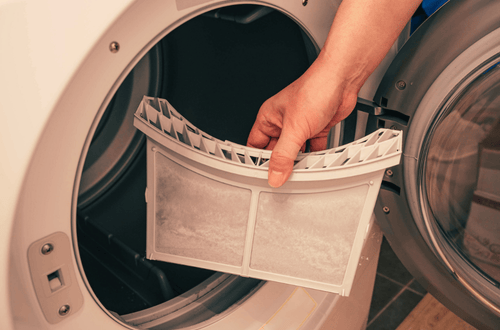
Some washing machines now come with fibers filters that catch microplastic fibers before they go down the drain. As of 2025, these filters are becoming mandatory for new washing machines in the EU, but in South Africa, there’s no such requirement yet—so most machines here won’t have this feature. If you care about keeping plastic out of our water systems, it’s definitely worth checking for this when you shop.
Microfiber Filter for Washing Machines
The bottom line
A smart choice today can save you money tomorrow while also helping the environment. When you’re ready to replace that old washing machine, think about the water (and energy) you could save over its lifetime. Your wallet and the planet will thank you.